New Bedford in a storm

THE GEESE were already south, and we were pointed down-coast too. But the grey fringe of “Tropical Storm Sean” showered New England nonstop today, changing our plans. So we tucked into New Bedford to try to dry off.

“Bet that’s fun,” a stranger walking out of a local McDonalds said sympathetically, glancing at my dripping-wet rain suit. “Man, I hate riding in the rain!”

Yeah and it’s not the most fun we’ve had either.

But you know you’re going to get rained on biking cross-country, so best not to take it too personally. Plus, we really haven’t had that much rain.

A month and a half ago, I’d begun this journey by motorcycle with some excellent cold-weather riding gear — synthetic-fabric coat and pants padded and cut specifically for biking. But I knew all along the outer shell was only rain-resistant and eventually I’d have to plunk down for a real water-proof biker’s rain suit.

That time came without argument in Red Lodge, Montana, with a storm that soaked me to the skin and dropped snow on the Rockies. So in neighboring Cody, Wyoming, I found a bike shop that sold the kind of road-worthy rainsuit that was exactly what I needed — and stowed it away in the tail-bag. There it remained unused in its compact little case for the next thousand miles or so — as we rode under mostly clear autumn skies through the rest of Wyoming, Colorado, Nebraska, Iowa, Wisconsin, Illinois, Indiana, Michigan and part of Ohio.

Leaving Ohio, I finally had to pull out the rainsuit to get us to Buffalo, and I was pleased to find out how well it did its job. Since then I’ve learned that it’s possible (with certain precautions) to ride reasonably safe in the rain. But wet weather is also a great excuse to sometimes take cover and explore the indoors, which is why I was stopping at McDonalds.

No, not to try the new McRib sandwich.

Just coffee and free Wi-Fi. Hassle-free and password-free Wi-Fi. Which is now offered at every McDonalds in the nation. Which has effectively turned the golden arches (love them or hate them) into the most dependable hotspot you can find.  There with my laptop at all times of night or day I can quickly check out directions and distances on the internet and cull local media for any interesting events.

That’s how I learned that New Bedford happens to be home to one of the finest whaling museums in the world — as I suppose befits the town that once served as the undisputed whaling capital of the world.

You might also recall that Herman Melville famously set the opening scene of Moby Dick in New Bedford, where on a cold and stormy winter night Ishmael sought refuge in the warm glow of the “Spouter Inn.”

And this month and next, artists and historians and retail businesses throughout New Bedford are celebrating that fact and more with a local multi-media festival called “Moby.”

So I decided (on Harvey’s behalf) that our arrival time there couldn’t have been better. The museum would be open all afternoon.  The rain was beginning to fall even harder. A cheerful little alehouse just then was offering a special on New Bedford clam chowder. All the signs, as they say, were auspicious.
This slideshow requires JavaScript.

Posted in Road Trip | Leave a comment

Robert Frost country

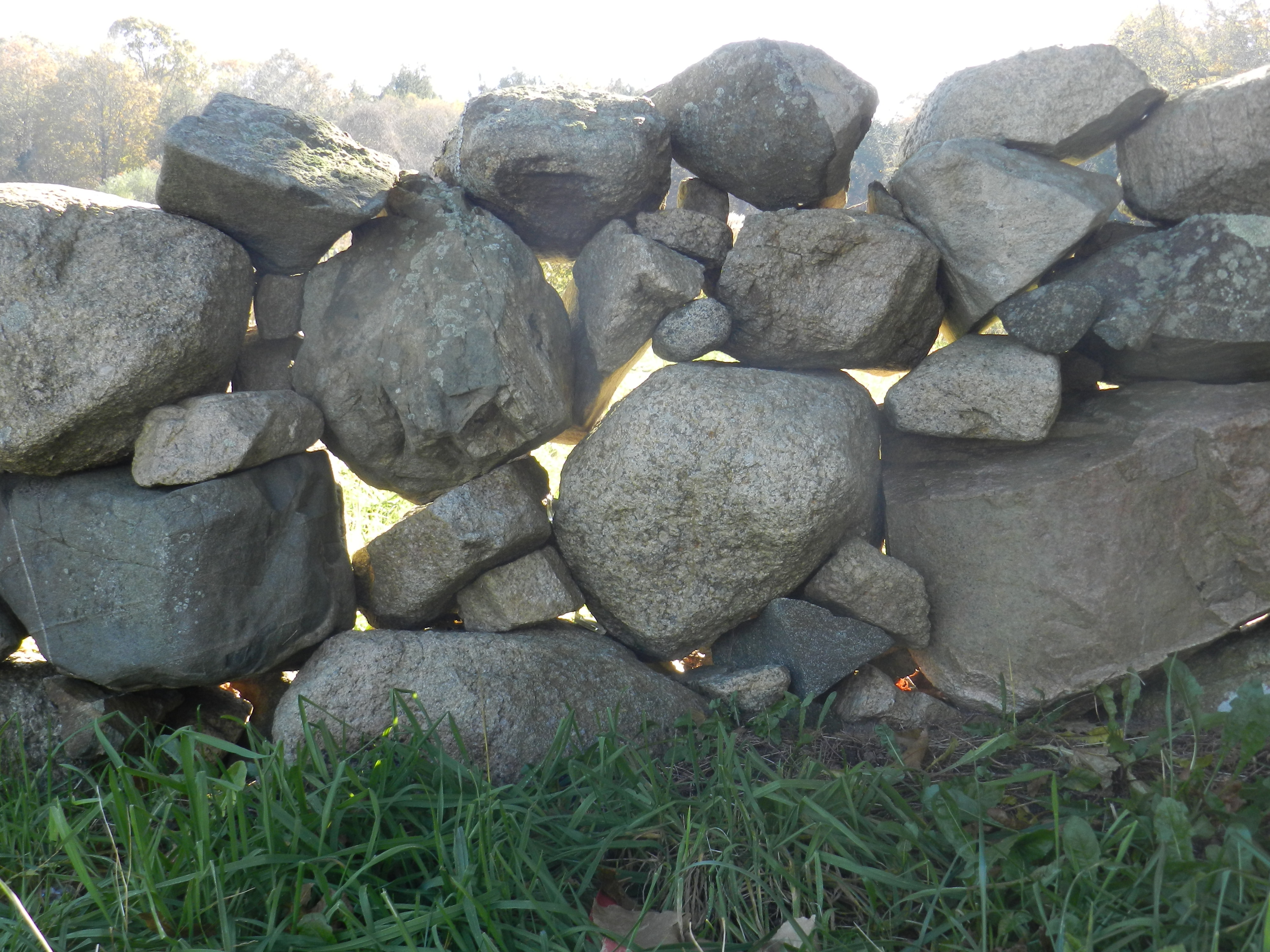
“Mending Wall” — waiting for winter in eastern Massachusetts…

"And some are loaves and some so nearly balls/ We have to use a spell to make them balance:/ 'Stay where you are until our backs are turned!'"

Posted in Road Trip | 2 Comments

Morning in Maine

Voters in Maine today repealed a new Republican-backed law that requires residents to register to vote at least two business days before an election. They also turned thumbs down on efforts to build a casino and a racing track.

The so-called “people’s veto” of the GOP overhaul of Maine’s 40-year-old voter registration laws was seen as a big victory for college students and lower-income residents, who are more inclined to move from one neighborhood to another to make ends meet — and don’t learn that their names are missing from voter registration lists until the day of an election.

Democrats had widely supported the repeal, while Republicans opposed it — as did Gov. Paul “Tea Party” LePage, who also said this week that he would like to start drug-testing anyone in Maine who receives welfare payments.

Proponents of the gambling casinos touted the revenues and jobs they would bring to Maine. But opponents claimed the negative social costs and extra police work would outstrip the positives, and tying the state’s education revenues to gambling was poor public policy.

This slideshow requires JavaScript.

Posted in Road Trip | 4 Comments

The last best place

This slideshow requires JavaScript.

I love where I live in Alaska, and I don’t want to move.

But when I first moved there from California 30 some years ago, I never expected to stay. It was just a stop on the way to a place that might be a little bit better – the place where I’d eventually choose to live.

Many of the people I’ve talked to, especially in the western U.S., tell me a very similar story. They never expected to end up where they are – but something happened and they did.

Genetic scientists can now trace this very human compulsion to want to move to a self-perceived better place fairly accurately by examining an individual’s DNA.

They do so by comparing shared population markers in the DNA and mapping where those populations used to live. Ultimately the ancestral trail of everyone alive today leads back to Africa, where the human family began a great migration north some 60,000 years ago.

Over the past decade, cartographers with the National Geographic Society have drawn up a  “genographic map” that shows the migratory paths different populations followed as they moved out of Africa, first to a great crossroads. Some turned east and populated India, Australia and Asia, including some who eventually crossed the land bridge into America. Others turned west and populated Europe, or at least the southern portion that wasn’t covered in ice at the time. And over the last millenia, some of those “westerners” have crossed the Atlantic and populated America too.

It’s much more complicated (and interesting) than that, of course, and the gene map (https://genographic.nationalgeographic.com/genographic/lan/en/atlas.html)makes the human homeland in North Africa look a little bit like a spaghetti machine, extruding separate strands of human pasta all over the world.

But for about $100 you can buy a little cheek-swab kit from the Genographic Project, capture some of your DNA in a vial, mail it back and receive in return an analysis of what paths out of Africa your own maternal and paternal lines followed.

My brother in Alaska did that, first requesting a record of our paternal lineage. After a couple months, the analysis he received back in the mail showed that our father’s paternal ancestors followed a well-worn path out of Africa — one that ultimately veered to the west toward southern Europe, where they arrived between 30,000 and 40,000 years ago, about the time that their distant hominid cousins, the Neanderthals (who’d lived there longer), were finally dying out as a species.

The genetic trail becomes a lot less distinct between 10,000 and 20,000 years ago, when populations mixed more and easier modes of transportation confused the picture. But genographers are able to say that a high percentage of the male population of northern Ireland resembles our own genetic lineage.

This agreed with what we already knew from family records and a bit of my brother’s conventional geneological research. Our line of Brysons had previously resided near the borderland between County Donegal and County Derry in northern Ireland. We must have been content there for a good long while.

But the great potato famine of 1840 changed that. Because the last five generations of Brysons (from my great-great-grandfather to me) have been engaged in a near-continuous westward migration — from Ireland to New England to Colorado to California to Alaska, where my wife and I have raised three daughters.

But now that our girls are fully grown, we can’t help but wonder: Where will they choose to live? It’s not likely they would end up anywhere further west than we did and still remain in the continental United States. And there is a distinct possibility they could end up back East, where all three either attended or are still attending college.

Thinking about this I sometimes picture the long terrestrial tide of American migrants flowing westward like an ocean swell, rising as a wave rises when it reaches California — cresting in Oregon, Washington, Alaska — and now ebbing back on itself, rushing back eastward.

So whenever I get a a chance to travel, I’m curious to look around for other “good places to live” — at least for the benefit of others who might still be looking.

I see places like Port Townsend, or Coeur d’Alene, or Bozeman, or Cody, or Fort Collins, or Iowa City, or Madison, or Ann Arbor, or Buffalo, or Montpelier, or Portland, Maine — or Anchorage — and I make a little mental note. Not bad, I think. Not a bad place to live.

Montreal, Quebec, in Canada (with my daughter Katie this week, on a brief road trip to a small French-Canadian bakery in search of the world's best bagels)

Posted in Road Trip | 4 Comments

The numbers so far

Heart of the journey

On one level we’ve already failed miserably.

Harley and I should have been able to cross the country in two days and zero hours, according to the Google Direction-Finder.

That’s assuming we had:

(1) unwaveringly followed the Direction-Finder’s route advice on traveling the entire distance on Interstate 90, which it calculated to be 3,011 miles from Tacoma, Washington to Northampton, Massachusetts, and

(2) constantly maintained the speed limit without ever stopping, except maybe for toll booths.

But we just completed a variation on that journey and the calendar tells me it took us 43 days.

Maybe that’s because, on numerous occasions, I wanted to stop to eat or sleep or refill Harley’s modest gas tank, or check the bike’s tire pressure and fluid levels. Or take a picture. Or get out of the wind or rain or snow. Or talk to someone. Or check my email and surf the internet. Or publish a post on my blog.

And instead of traveling 1,500 miles a day, our daily average was more like 150.

That plus we strayed wildly off Direction-Finder’s recommended route, charting a course that ultimately wiggled all over the map, beginning by heading off in the wrong direction (west) around Washington’s Olympic peninsula, then bending down from Montana into Wyoming and Colorado, then up from Iowa into Wisconsin, then down into Illinois and Indiana and so on — ultimately stretching a 3,000-mile trip into 5,000 miles.

And we’ve yet to reach the halfway point.

But none of this was Harley’s fault. I repeat. None of it was the fault of my huge-hearted little Sportster.

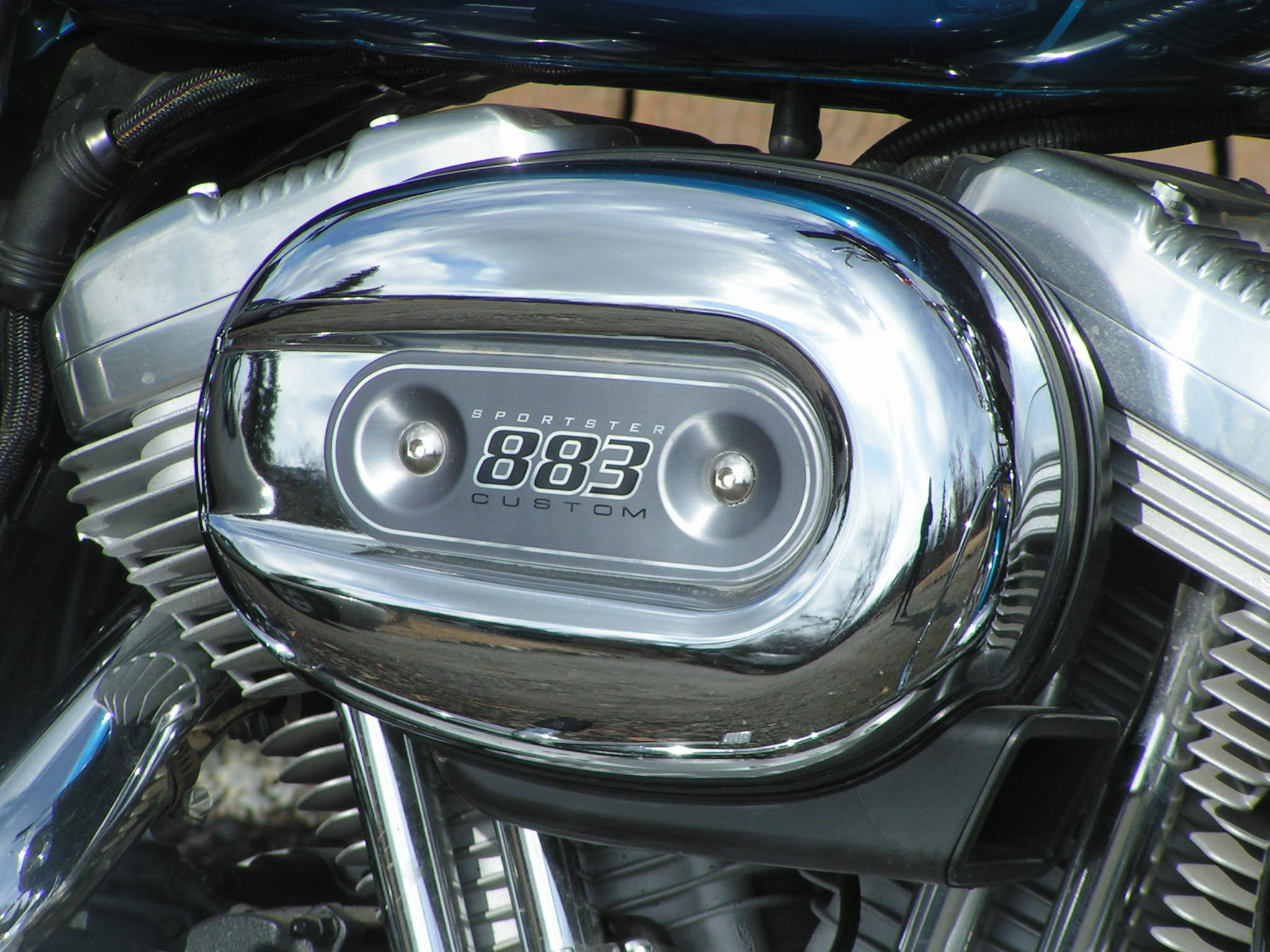
In fact, for such a relatively-speaking small bike — his 883 cc power plant measuring in at less than half the size of the engines that power the Road Kings and Gold Wings of the world — Harley’s numbers have really been impressive so far.

Average gas mileage: 55 mpg.

Oil consumption (after 5,000 miles on the road): one half of one quart.

Tires and pressure: treads still healthy, pressure holding strong.

Battery: has never failed to start (including a chilly 30-degree morning in the Tetons at elevation, and a foggy 24-degree morning in upstate New York).

Mechanical issues: None. So far. (Knock on metal.)

In fact it’s time right now for an oil change and a well-deserved tune-up in a little Harley shop in western Massachusetts. And that’s how we’ll spend the next day.

Posted in Road Trip | Leave a comment

Avoiding the snow … in Buffalo

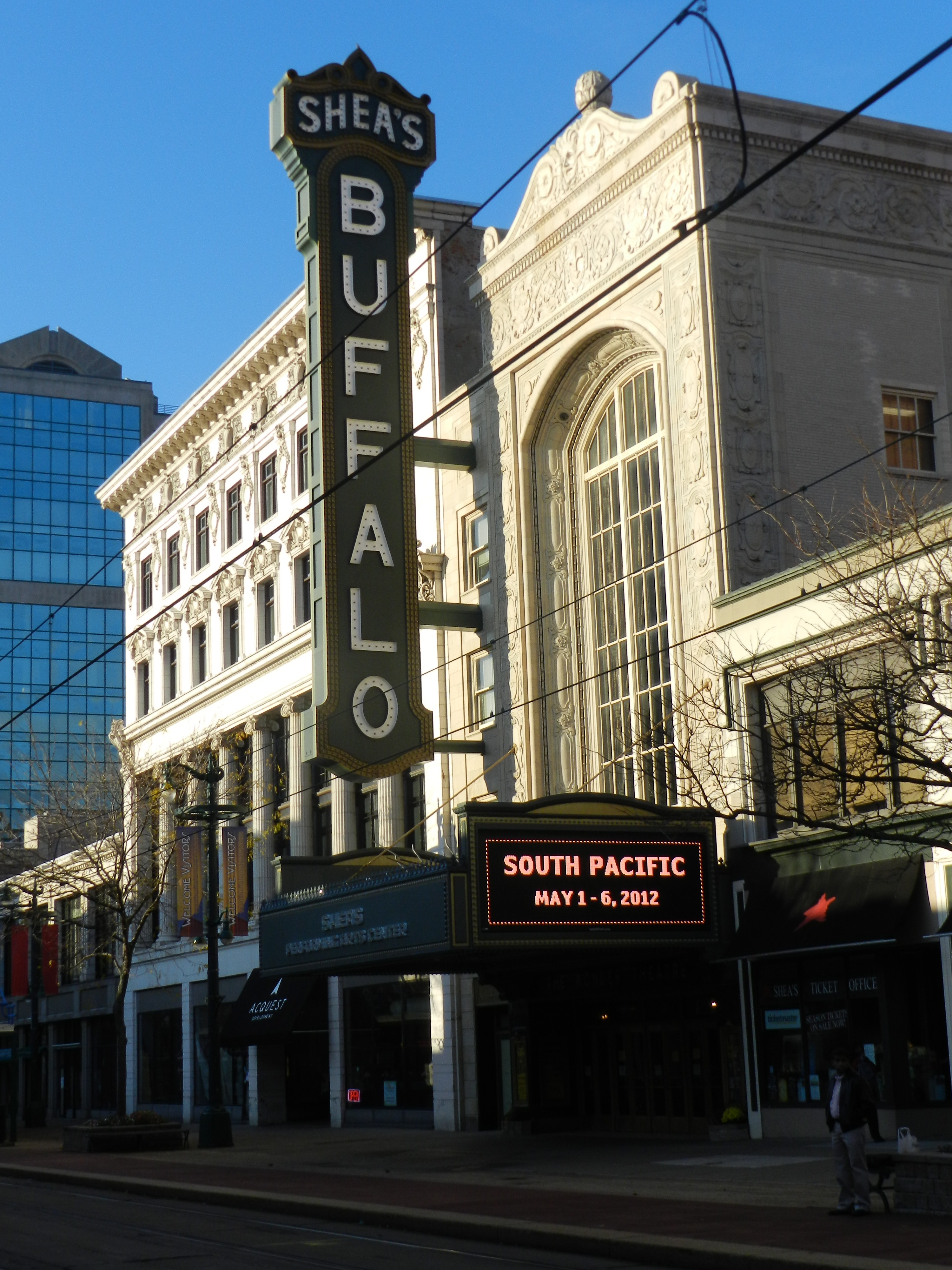
The view from the hostel -- in the heart of the old Buffalo theater district

Western upstate New York was at its colorful best Friday as we arrived for Halloween weekend. Buffalo and Niagra Falls in particular were crisp and clear and so autumn-handsome we lingered an extra day. Found a really nice hostel across the street from the historic Buffalo Theatre, and the next day enjoyed hiking around the Falls — my first glimpse ever at Niagra.

It was 25 miles in the wrong direction (so 50 miles out of the way), but I was finally able to quell that nagging “must-make-better-time” feeling and decided it would be a real shame not to pay respects to America’s very first state park — let alone one of the world’s greatest natural wonders — when it was closer to us than the distance from one side of Anchorage to the other.

Even so, I still thought I’d just be snapping a picture or two and turning around. But I got so fascinated by the falls — as well as the history of the Erie Canal that built Buffalo and opened up the West — that we ended up staying until Sunday. Which turned out to be a blessing wrapped in a blessing.

That’s because, as you’re probably already aware, a very unseasonal snowstorm slammed into the East Coast — from Pennsylvania to Maine — that same day. Where we were was clear; the storm totally missed Buffalo. But to the east, where we had planned to go next, trees still laden with all their autumn leaves were caught red-handed, so to speak.

About a foot of heavy wet snow and ice clung to the leaves and branches and tore down thousands of hardwoods. As limbs fell, power lines did too. Three million people in a half dozen states lost their lights and power. Where my daughter lives, in Northampton, Massachusetts, the city was dark and cold for nearly two days.

I couldn’t help but feel guilty for failing to be there to help her as she battled the elements in the dark. But I also knew that I never would have been able to reach Northampton through ice and snow on a motorcycle.

So we waited until the storm abated and road conditions improved Sunday morning, then Harley and I began edging that way, first by riding east from Buffalo to Albany on Route 20, which rolls through picturesque farms and towns along a course that roughly parallels the old Erie Canal.

It was one of those moments when I was really glad I was on a motorcycle, glad to smell and feel the air, to roll up hills as freely as someone on horseback, weave through turns as rhythmically as a skier.

The sun, the autumn day, the old houses, the children playing, the perfect farms, the open road — everything was so handsome, part of me wanted to take a new picture about every five minutes. But part of me didn’t want to take any pictures at all — and that part won. Just experience it, I finally told myself. Don’t interrupt the movie.

This slideshow requires JavaScript.

Posted in Road Trip | 1 Comment

Midnight in Ohio

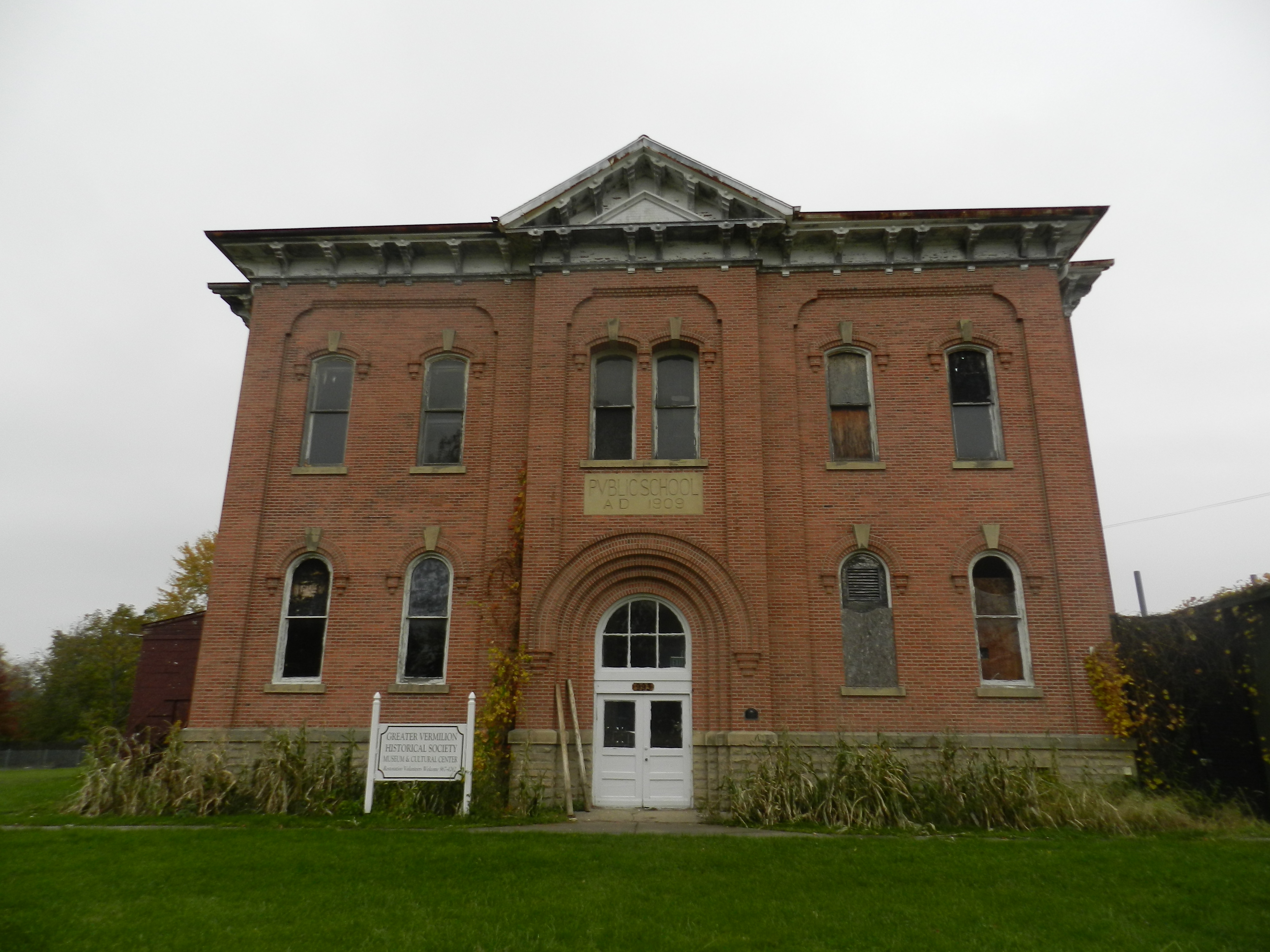
A typical haunted schoolhouse in rural Ohio, where every night is Halloween.

I won’t try to sugarcoat it — the journey hasn’t been carefree every mile of the way. There’ve been a few moments. Deer darting onto the highway in Idaho and Wyoming. That stand-off with the buffalo in Yellowstone. Maybe the lightning bolt in Montana. There were even a few cracked twigs in the night in grizzly country in the Tetons (where brown bears are still trying their best to fatten up).

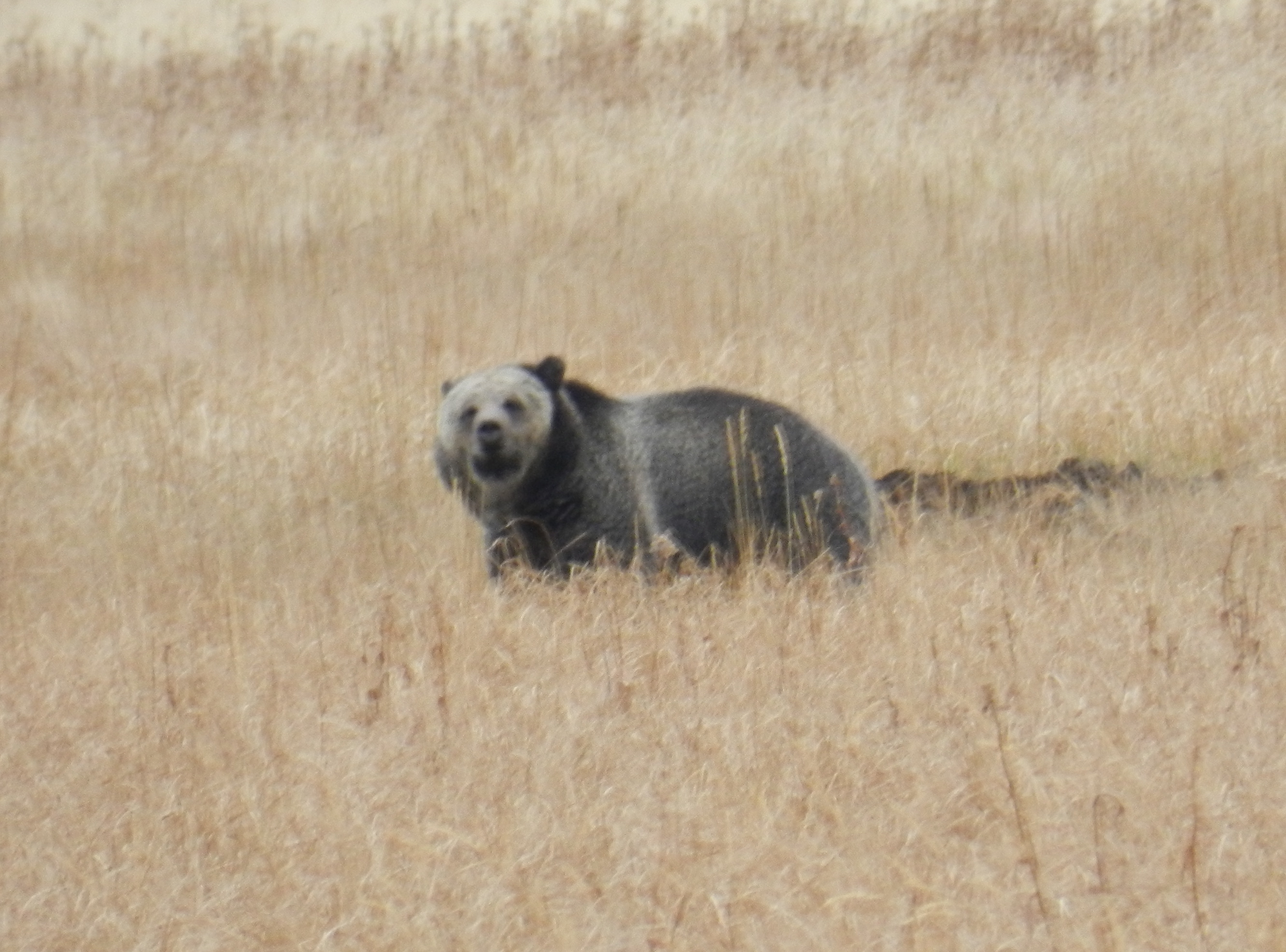
A grizzly I spotted near the park road in Yellowstone, feeding on a large unidentified carcass.

But nothing really prepared me for Ohio. Shortly before I arrived there, the 62-year-old owner of a wild animal farm in a place called Zanesville released dozens of animals from their enclosures and then pulled out a revolver and shot himself dead. This wasn’t like someone at the Alaska Zoo in Anchorage suddenly losing it and deciding to throw open the gates to the raccoon cage and suffer the consequences. These were large animals — all carnivores — and there were lots of them. Released near the highway that runs through Zanesville were (count them) 18 tigers, 17 lions, 6 black bears, 3 grizzlies,  3 leopards, 3 cougars, 3 wolves and one monkey.

This got my attention.

I wondered, first of all: Where’s Zanesville? Wikipedia describes it as a town of about 25,000 people in central Ohio that was named after Ebenezer Zane, who blazed Ohio’s very first road — “Zane’s Trace” — about five years before Lewis & Clark even got started. His path would later become part of America’s transcontinental Route 40.

The good news was: Harley and I weren’t traveling on Route 40. We were up north of there. The bad news was: Bears can travel a hundred miles a day, let alone lions and tigers and cougars eager to stretch their legs.

Unfortunately for the animals, the whole story concluded fairly quickly, as local police captured the three leopards and one of the grizzlies and shot and killed all the rest — with the exception of the monkey, who’s still on the run.

I was thinking he might feel right at home in Maumee Bay State Park, where I’d pitched my tent in the dark that first night in Ohio in a near-empty campground. I’d picked up a flyer about the park at the registration gate. Once I’d wiggled inside my sleeping bag and had a bite to eat, I pulled it out to read up on Maumee Bay.

Located a few miles outside of Toledo where the Maumee River flows into the southwest corner of Lake Erie, the park today is half meadow, half wetlands — and used to be all wetlands before white settlers drained the swamps to establish farms. Scientists say it’s part of the Great Black Swamp that used to stretch 40 miles inland along nearly the whole southern shore of Lake Erie.

Wetlands, of course, contain more species of wildlife than any other habitat type. Naturalists have counted more than 300 species of birds in Maumee Bay, which serves as an important refuge for the great blue heron with its six-foot wingspan. But other critters abound there as well, including frogs, turtles, water snakes, spiders, mice and all sorts of bugs. As I snuggled in, an uninvited spider walked across the top of my bag. Outside the tent, thousands of crickets made a racket that nearly thundered. A very active biomass indeed.

Awaking to a cacophany of bird song, I thought: Good morning, Great Black Swamp. Nothing frightening here. Just a lot of living things trying to keep on living.

But the rest of Ohio that day seemed a little bit fixated on death. Or was it Halloween? I passed countless homes with pretend gravestones in their yards.  I passed a derelict public schoolhouse in Vermillon with a sign outside that described it as haunted. I passed a cornfield maze guaranteed to scare young children who panic when they’re lost. And I passed a farming area with its own nuclear reactor.

When the rain began to fall hard all the next day, I had to forego a few promising Ohio destinations a friend had suggested and make a strategic run for Buffalo, New York — which I reached late in the evening a little bit wet and thought: Good night, Ohio. And good luck, little monkey. May the swamp be with you.

This slideshow requires JavaScript.

Posted in Road Trip | 1 Comment

The Omnivore’s Dilemma — Battle Creek, Michigan

The former Battle Creek Sanitarium, where the devout Kellogg brothers got their start -- John by promoting his "legendarily nutty" wellness diets and therapies, Will by founding a cereal empire. The sanitarium fell on hard times during the Great Depression. During World War II it served as a military hospital. It's now a federal building.

I have been a consumer of American breakfast cereals my whole life long. In fact that’s probably how I first learned to read — with blurry eyes staring at the back of a Kellogg’s Corn Flakes cereal box as the little boy I used to be tried to wake up.

There were always corn flakes in our home, but if I was lucky there’d be a box of Kellogg’s Sugar-Frosted Flakes as well, which I thought tasted a whole lot better.

If you were to ask me then — when I was 5 or 6 — just where it was that Kellogg’s cereals were manufactured, I could have easily told you: It was Battle Creek, Michigan. It was printed very prominently right there on the box.

So I wasn’t surprised at all when some of those long-sunken memories suddenly resurfaced Tuesday while entering Battle Creek on a sunny Michigan morning.

Immediately I thought it might be interesting to take a visitor’s tour of the still flourishing Kellogg’s plant. It wasn’t just some artifact out of the past. Since the days of my childhood, Kellogg’s had prospered exponentially and expanded around the world.

Researching the subject quickly during a breakfast stop, I learned (online from Wikipedia using Kellogg Company documents as source material) that it currently produces more than 60 brands of cereal. Old standards like Corn Flakes, Rice Krispies and All-Bran are still around, as are Sugar Frosted Flakes (the word “Sugar” having been deleted from the title, if not the product itself, back in 1980, as America grew much more health conscious).

Kellogg products, which also include such notorious tantalizers as Pop Tarts, Cheez-Its and Eggos (when you inevitably pour on the butter and syrup) aren’t just manufactured in Battle Creek and sold to Americans anymore. As the largest cereal producer in the world, with more than $13 billion in sales in 2008, their products are now manufactured in more than 19 nations and marketed in more than 180 countries around the world.

But the managment, if not all the money, ultimately comes back to Battle Creek, which remains Kellogg’s global headquarters. In this day and age, when most of what we buy comes from somewhere other than America, I thought again that touring the plant might be enlightening.

In fact I’d done so once before, years ago, when I was courting a young Michigan girl and spending time with her family. The Kellogg’s of Battle Creek tour we took back then had some of that openness and innocence of a time gone by, with no effort at all to hide raw assembly line procedures that today might make a corporate-lawyer wince.

As I recall we all left the plant cheerfully with sacks full of an assortment of those little Kellogg’s mini-cereal boxes, which they said you could open on the perforated line right down the middle and use just like a cereal bowl. I wondered if I’d get some again.

But no, I wouldn’t. In fact I wouldn’t even get inside.

“We don’t have tours for the public anymore,” a spokesman outside the headquarters office told me. “We used to long ago, but now we don’t.”

Then before I had a chance to ask him why they don’t, he slipped back into the office. Which left me at a loss for a moment. I’d done all that nice prep work. Now it would come to naught. And I was really looking forward to the pictures.

So instead I took a few shots from outside the fencing, where a train was presently parked with no fewer than 12 empty rows of train tracks along side it  — for days, I suppose, when either raw corn, or corn syrup, or high fructose corn syrup, or chemicals I’ve never even heard of before just couldn’t be delivered fast enough.

That’s when I recalled reading Michael Pollan’s really excellent book that documents the American food industry and the way we eat, entitled “The Omnivore’s Dilemma” — in which he particularly takes to task the U.S. emphasis on producing so much corn AND U.S. households for consuming so many processed, sugary by-products of corn. Like the high-fructose corn syrup that Kellogg’s adds to so many of its cereals.

Pollan especially found fascinating the beginnings and eccentricities of the two original Kellogg brothers, raised in Battle Creek as Seventh Day Adventists. They’d worked together in the decades after the Civil War at the huge Battle Creek Sanitarium, a kind of early-day health spa based on the clean-living principles of their church. John Harvey Kellogg was the superintendent and William Keith Kellogg was the bookkeeper.

John would be remembered (at least by Pollan) for attracting thousands of patients a year to his “legendarily nutty” sanitarium to undergo America’s very first fad diet, consisting of nothing but grapes and yogurt (the latter administered to the digestive tract both fore and aft, so to speak, to battle the bacteria that Kellogg believed was generated from eating too much meat) —  along with near-hourly enemas.

Will was focused more intently on the cereal company the two brothers launched as a sidelight in the 1890s. They’d had a falling out over that. Will wanted to start adding sweeteners to the cereal. John was opposed. Eventually Will took sole control of the cereal enterprise and added the sugar. And the rest, as they say, is history.

This slideshow requires JavaScript.

Posted in Road Trip | 1 Comment

Relatives on the Road

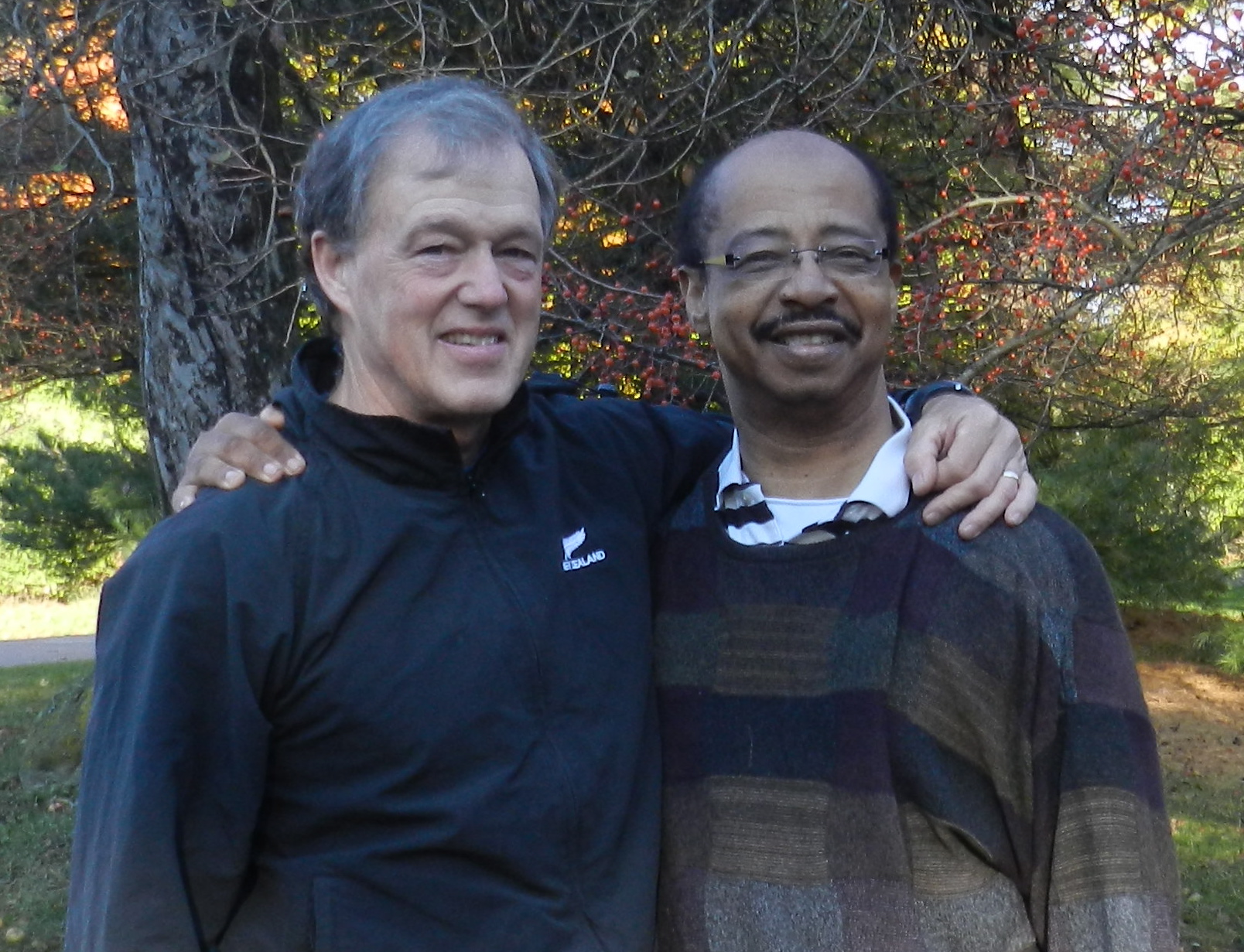
With Dr. Robert Alexander, aka my brother-in-law Bob -- outside his home outside Kalamazoo, Michigan.

Hail! to the victors valiant/  Hail! to the conqu’ring heroes/  Hail! Hail! to Michigan,/  The champions of the West! 

There, I’ve done it.

I’ve kept the little bargain I made with Dr. Robert Alexander, aka my brother-in-law Bob, whose only condition in exchange for my surprise visit and overnight boarding in the home he shares with my lovely sister-in-law Mary in Kalamazoo, Michigan, was that I post a picture of us together on my blog.

(O how easily these new web-based journalists can be bought and sold…)

In fact I’ve met that bet with Bob and seen him one better — by reciting the Michigan fight song in honor of his extraordinary son Robby, who (thanks to a special grant from NASA) is currently conducting break-through research on sounds from outer space while earning his doctorate at the University of Michigan.

Then again, what would a road trip be without paying a surprise visit to a brother-in-law or two … or three?

And I could say the very same thing about dropping in on my Alaska-Home-Grown niece and nephew(s) Karin and Patrick and David in Portland, Ore. … and nephews Andrew and Tim in Fort Collins, Colorado …  and in-laws (of-my-in-law) Penny in Coeur d’Alene, Idaho, and Victoria in Bozeman, Montana … and ALL their assorted spouses and children.

Su casa es mi casa — si?

Or as New England poet Robert Frost once put it:

Home is the place where, when you have to go there, They have to take you in.”

Nice!

This slideshow requires JavaScript.

Posted in Road Trip | 3 Comments

Game Day — South Bend, Indiana


This slideshow requires JavaScript.

Before Notre Dame and USC clashed in South Bend Saturday night in their annual football rivalry, students and fans there celebrated all day long in one of the biggest tailgate parties in the nation, equal parts pagan rite of autumn and religious crusade.

This was not news.

Defeating the spoiled infidels from Southern California when they journey to South Bend is a huge priority for the Fighting Irish, all the greater because the Trojans in recent years seem to win more often than not.

So the feasting and drinking (which began the night before) lasted all day long. A special mass was held on campus. Alumni flooded into town from all corners of the country. And scalpers scored huge profits selling at a premium the last few available tickets. Though I didn’t know that in the beginning, when I first began to look for a ticket of my own.

It was about three hours before the scheduled kickoff — as the Notre Dame players dressed in their school blazers emerged from the library with its huge mural of “Touchdown Jesus” overhead to walk through a cheering gauntlet formed by the student body in the team’s traditional walk through the “Knute Rockne Gate” of the stadium — it was then I noticed several individuals on the periphery holding up one or two fingers without any enthusiasm.

So I asked one, an older gentleman who was  holding up one finger, if that meant he had one ticket to sell. No, he said. It meant there was one ticket he wanted to buy — so he could get into the game himself.

I asked him how much he expected to pay. It was hard to say, he said. Sometimes someone in a party can’t attend the game and someone else in the same party has an extra ticket and they just give it away. But scalpers sell tickets too and they try to get as much as they can.

“Until just before game time, and then their prices begin to drop.”

So I decided to try it too. As I was walking toward the main entrance, I lifted up one finger.  Very quickly two large men floated up alongside me.

“How much are you willing to pay,” one said.

“Well, I was kind of hoping you would just give me a ticket, ” I said. “I’ve come all the way from Alaska.”

“Then you really must want to buy one bad,” he said. “How much are you willing to pay?”

I pulled out my wallet and looked inside. “I have $20 in cash,” I said.

Then with what I think was a derisive snort he stuck the ticket he was holding back in his shirt pocket and he and his associate began walking away.

I called after them: “I could write you a check and pay a little bit more…”

“Hah!” he said.

Later I walked up to an even older fellow with a white beard (reminscient I thought of the Irish playwright George Bernard Shaw) who was holding up a single finger and asked him how much he expected to pay.

It would be nice to get a ticket for free, he said, but not long ago, for a lesser game against Purdue, he paid $150. Then, when he took the ticket to the gate the person at the turnstile scanned the ticket, looked him in the eye and told him it had been reported as stolen.

“So, don’t buy any tickets from the South Bend scum,” he said. “Look for someone from USC. And make sure the ticket you buy has the laser mark on it. Some of these South Bend scum are printing tickets that look like the real thing, but they won’t take them at the gate…”

The finger I was still holding up was beginning to waver some — especially after I learned that I wouldn’t be allowed in with the daypack full of camera gear I was wearing. I would have to check it at the gate, and I wasn’t too keen about doing that.

“How much can you pay,” a voice behind me said.

I turned around to face a young guy who appeared to be a local.

“How much will you sell it to me for?” I asked.

“I’ll take $100,” he said.

“How about $50?” I said, even though I knew I didn’t have that much.

“Fifty dollars!” he said. “Boy, you must be out of your mind! This isn’t Purdue. This is Notre Dame and USC!”

“Yes,” I said. “I know.”

It most certainly was.

Posted in Road Trip | Leave a comment